Meditation Centre in Rishikesh: Understanding Meditation, Ayurveda and Panchakarma Experiences
For years, Rishikesh has been a magnet for people wanting to slow down and learn from traditional Indian practice. Nestled at the foot of the Himalayan foothills on the banks of the Ganges, it has become a popular destination for yoga, meditation and Ayurveda. This guide will explain how these practices work together and how to find a program that is right for you.
What is meditation and why do people meditate
Meditation is a family of practices that train the mind to increase attention and awareness and calmness. There are tons of reasons why people take it up:
- To create a routine break in a busy day
- To be more aware of feelings and thoughts
- Breathwork or a contemplative lifestyle to go with yoga
- To look into the introspective side of Indian traditions
Meditation is often promoted as helpful for general wellbeing, but it is a personal practice, not a medical treatment. Everyone has different experiences.
Various Techniques of Meditation
Most traditions fit into a few general categories:
- Meditation on the breath: the attention is focused on the natural breathing.
- Mindfulness or awareness practice: noticing thoughts, sensations and sounds without judgment.
- Mantra meditation: Repeating a word or sound as a focus for the mind.
- Guided meditation: Following spoken instructions from a teacher, often helpful in the beginning.
- Movement practices: gentle sequences to prepare the body and mind for stillness.
Getting Started for Beginners
More than just dabbling, a structured start does the trick:
- Start with 5 to 10 minutes a day at the same time.
- Sit comfortably, on a chair if the floor is difficult.
- Pick one technique, like breath awareness, and stick with it for a few weeks.
- you will be a wandering mind. The practice is one of noticing and coming back to your focus.
- Take a beginner-friendly Meditation Course so that a teacher can answer questions and correct common mistakes.
- Things to Consider When Choosing a Meditation Center in Rishikesh
Rishikesh has a lot of options and beyond photographs help. Questions to ponder:
- Teaching style: Transparency of the lineage or method
- Teacher Experience: Are the teachers trained and do they have years of teaching experience?
- Level appropriateness: Are there separate paths for beginners and seasoned practitioners?
- Group size: Generally, smaller groups provide a more personal guidance.
- Schedule and pace: Is there sufficient time between sessions?
- Facilities: Are the practice rooms and accommodation clean, quiet and well maintained?
- Transparency: Are prices, inclusions and cancelation terms clearly stated?
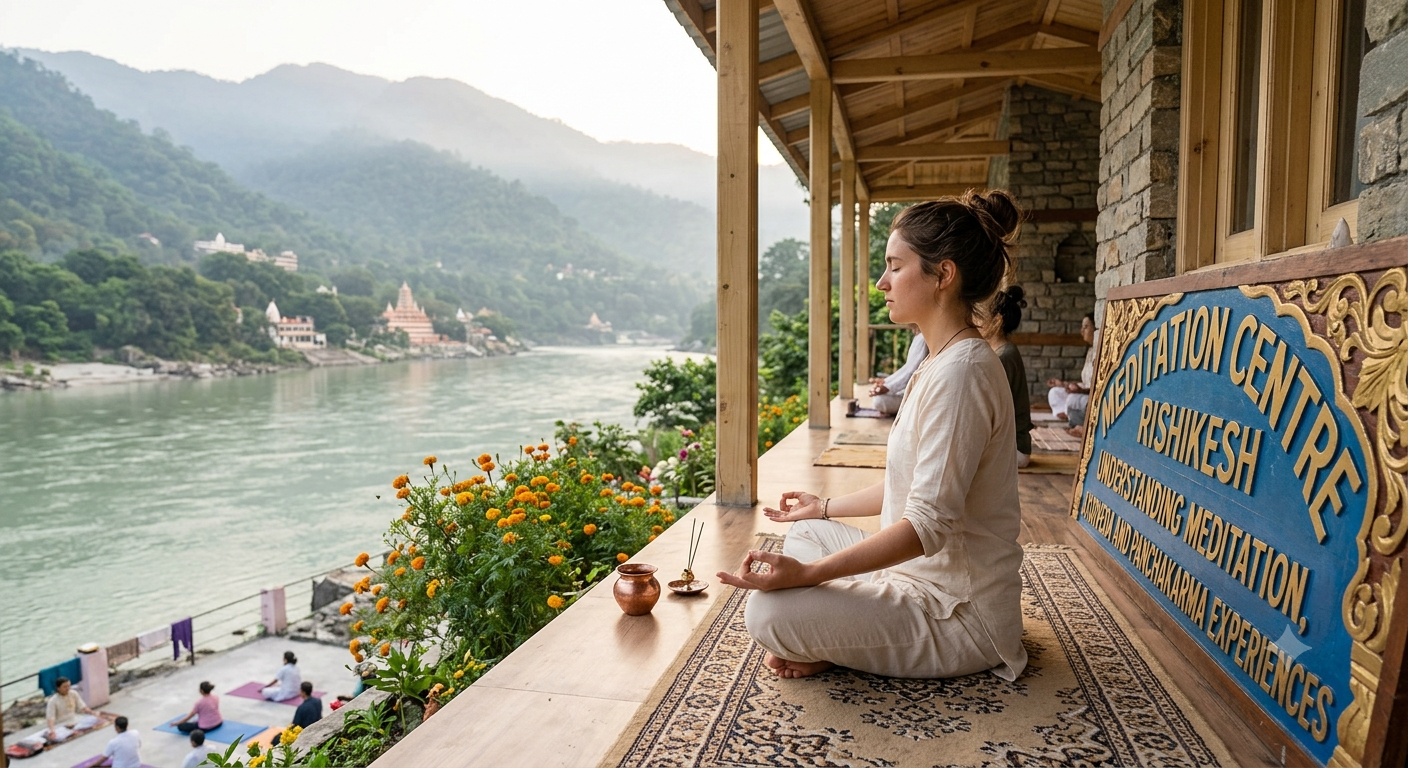
Yoganandham, a yoga and wellness Meditation Center in Rishikesh, offers yoga, meditation and associated traditional wellness programs. Here’s one example of the type of setting visitors may encounter. Whatever you think of, compare several, read the program details carefully and ask questions before booking
Where does meditation fit in yoga courses and retreats
In classical thinking, yoga is not only a physical posture. Postures (asana), breathing practices (pranayama) and meditation are traditionally associated with one another. Yoga and Meditation are therefore often taught together.
A typical Meditation Retreat or a yoga program in Rishikesh may consist of:
Morning exercises or gentle postures
breathing techniques
Meditation practices (silent or guided)
Philosophy Discussions/Talks
Evening meditation or chanting;
Time to rest, walk and journal
Retreats may be held for a weekend or last for weeks. Longer programs give you more depth but need more commitment – be realistic about your energy and experience.
What Is Ayurveda?
Ayurveda is a traditional Indian health and lifestyle system, with roots going back thousands of years. It is often translated as ‘knowledge of life’. Its traditional approach promotes balance in daily practices, food, sleep, seasonal practices and mental wellbeing.
According to the classical Ayurvedic texts there are three doshas (Vata, Pitta and Kapha) conceived of as patterns of qualities both in the person and in nature. These are traditional concepts, not fitting into modern biomedical categories. Today, many people view Ayurvedic Wellness as a cultural and lifestyle paradigm, in addition to, not in place of, conventional healthcare.
What Does Ayurveda Course Cover
In Rishikesh, an Ayurveda Course or Ayurveda Training program can range from short introductions for travelers to longer, structured programs for students. Common topics are:
Basic concepts: the five elements, the doshas and the idea of individual constitution (prakriti)
Daily routines (dinacharya): wake-up time, tongue cleaning, oil massage (abhyanga), meal times, sleep habits
Ritucharya, seasonal habits: habits of adaptation to the season
Principles of nutrition: food quality, tastes and mindful eating
Cultural knowledge studied about herbs and spices: traditional uses in cuisine and health
ntroduction to therapies: overview of traditional treatments including Panchakarma
Routine, stress and rest: the link between lifestyle and mental wellbeing
Find out whether a course is for personal interest, or for professional training and what certificate it gives, if any. Completing a short course does not qualify one as a licensed medical practitioner.
What is Panchakarma In Ayurvedic Tradition
Panchakarma means “five actions” in Sanskrit. In classical Ayurveda it refers to a set of cleansing and rejuvenation procedures that are preceded by preparatory steps. Panchakarma Treatment is a traditional practice and its concepts are taken from Ayurvedic texts and not from modern clinical science.
Modern Panchakarma Therapy programs often contain milder elements like:
Preparatory oil therapy and massage:
Herbal Vapor
Diet advice is to eat simple warm food.
activities for rest and reflection
Traditional descriptions of cleansing are not equal to “detoxification” in a medically established sense and no wellness program should be marketed as a cure or guarantyd result.
Why Programs Differ, Why Assessment Matters
The length, intensity and contents of the Panchakarma programs vary greatly. A qualified practitioner would usually take a health history, ask about current conditions and medications and adjust or decline a plan accordingly.” Beware of providers who will try to sell you a one-size-fits-all package without a consultation.
Things to think about before enrolling in an Ayurveda or Panchakarma program
Not everyone is a candidate for panchakarma and other intensive programs. Consult relevant specialist medical advice before taking part if you:
Existing medical condition
Take your prescription medicine
Pregnancy or breast-feeding
Past history of eating disorders, heart conditions, digestive issues or other specific health problems
Post surgery or recovery from illness
Tell the practitioner about allergies and never discontinue prescribed medication without your doctor’s guidance. Ayurvedic programs should never replace appropriate medical care, only supplement it.
Meditation, Yoga & Ayurveda Combined
The three traditions are a natural complement for many visitors. Here’s a possible broader Rishikesh Wellness itinerary:
Morning: Restorative Yoga & Meditation
Midday: A simple and nutritious meal according to the Ayurveda principles
Afternoon: Ayurveda class/consultation
Evening: quiet reflection, writing in journal or walk along Ganges river
A packed schedule is usually not as good as one or two classes a day and a well-balanced week for a first visit.
How to Evaluate Practitioners, Facilities and Consultation Procedures.
Look for Before Booking:
Qualifications: Recognized Ayurveda degrees or documented training for practitioners and certified yoga or meditation teaching credentials
Program structure: clear daily schedule, defined inclusions, and realistic expectations
Consultation process: initial conversation concerning your health before any therapy is provided
Hygiene: clean treatment rooms, fresh linens and sanitized equipment
Facilities: comfortable, quiet and safe practice and accommodation areas
Communication: honest answers, no pressure, no exaggerated claims.
A provider who claims they can cure disease or promises dramatic results? Red flag.
Misconceptions “Meditation is emptying the mind.” It’s not about stopping thought, it’s about watching the mind. “You have to sit cross-legged for hours. You can work on posture, short sessions are fine. “Ayurveda is just massage and oils. It also contains routines, food and lifestyle principles. “Panchakarma is a quick fix. It is a traditional practice, formal, not shortcut. “Natural means risk free. Some people can still be adversely affected by herbs and intensive therapies.
Why Wellness Practices Aren’t Guarantyd Cures
Meditation, yoga, Ayurveda and Panchakarma can be incorporated into a thoughtful lifestyle, but none should be seen as a guaranty or a replacement for diagnosis and treatment by a healthcare professional. Ethical centers don’t make bones about this and encourage guests to see their doctor.
How to select the right program
Think about these factors:
What is your goal? Learning, relaxation, personal practice, or professional training?
Your experience: if you are new, choose beginner programs.
Duration: Take a shorter visit of 3 to 7 days and then stay for a month.
Comfort Level: food, weather, group size, silence, physical demands etc.
Health status: consult with your doctor and the program team.
Budget and logistics: confirm what’s covered.
Conclusion
Rishikesh provides a rich setting for exploring meditation, yoga and Ayurveda, but the best experiences come from thoughtful preparation. When selecting a Meditation Center and program, ensure it is aligned with your goals, review their credentials and facilities, pose candid questions, and undertake intensive practices like Panchakarma under expert supervision. A balanced, realistic approach is more likely to leave you with practices you can carry home.